
Start with what is free and closest to a booking: a complete Google Business Profile, a steady flow of reviews, and a list of past guests you can message by email, SMS or, in markets such as Thailand, LINE. Then add real food photos, table talkers that sell higher-margin items, one regular event, and a few local partnerships. Measure each one before spending more.
Quick answer
- Fix Google first: it is free and it is where guests decide.
- Build your own guest list (email, SMS or, in markets such as Thailand, LINE) so you are not renting every guest from an app.
- Use what is already in the room: table talkers, bill folders, menus and staff.
- Shoot your real dishes well, even on a phone, and post consistently.
- Test one paid idea at a time and keep the ones that bring covers.
Michael Clarke is a trained chef and runs Markedine, a restaurant marketing company in Bangkok. This article does not contain affiliate links.
Where should a restaurant with little money start?
With the guests closest to deciding. Someone who searches “restaurants near me” at 7 pm is minutes from walking in. Someone who scrolls past an Instagram post is months away, if ever. Small budgets should go to the near end first.
That is why my first three ideas are about Google, reviews and your own guest list. None of them need ad spend. All of them need someone to own them every week.
What are the best low-cost restaurant marketing ideas?
1. Complete your Google Business Profile
Right category, exact pin, real hours, current menu, good photos. Google says complete and accurate profiles are more likely to show in local results. It costs nothing but an afternoon. Start with the setup guide.
2. Ask every guest for a review
A QR card in every bill folder, the same polite words every time, and a reply to every review. See how to do it within Google’s rules.
3. Build a guest list you own
In most markets that means email or SMS; in Thailand it usually means a LINE Official Account. Collect contacts with permission at the table, on receipts and in delivery bags. Then message regulars about new dishes, events and quiet nights. We have seen this work: a French cafe on Sukhumvit built a LINE OA loyalty programme that generated over 200,000 baht in value within four months, and a modern Thai restaurant grew its LINE OA loyalty programme to well over 1,000 members across its two Bangkok rooms. Those programmes were part of wider paid work by my agency, so treat them as proof that a list works, not as a budget benchmark.
4. Post Google updates
Google lets you publish posts on your profile for offers, events and news, where the feature is available. A weekly post about a real dish or event keeps the profile active.
5. Shoot your real food properly
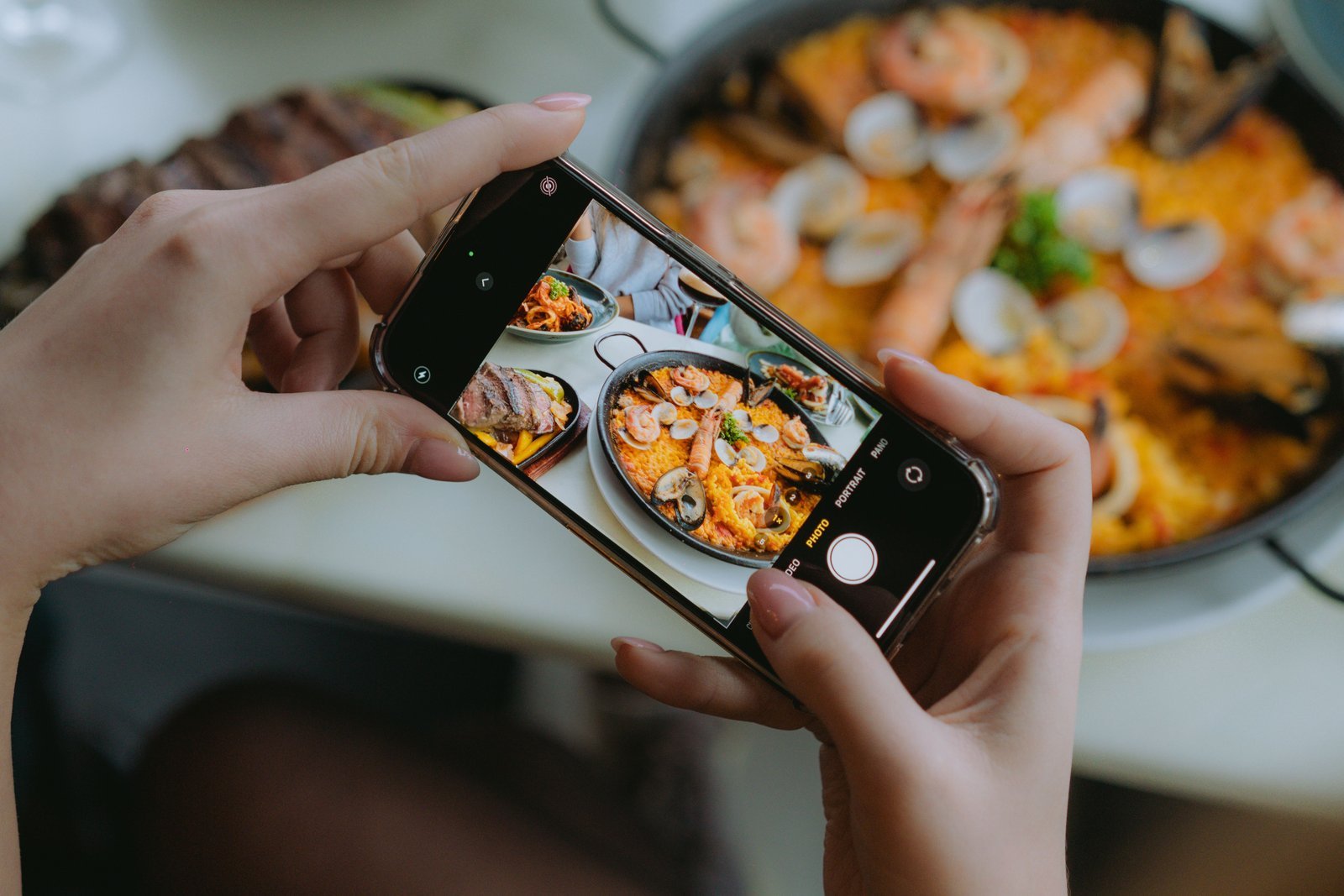
Daylight from a window, a clean plate, one dish per photo, shot from the angle that shows it best. Replace old photos of a room that no longer exists. Show the food clearly. When we photographed a Japanese-French skewer tasting menu in Bangkok, the brief was simple: make an unusual concept easy to understand at a glance.
6. Use the space you already pay for
Table talkers, menu inserts, the bill folder and the window are free media. Use them to sell higher-margin items and next visits: the weekend set, the dessert, the bottle of the month. The Sukhumvit cafe owner told us the focus on upsell artwork and higher-margin products was one of the things that helped most.
7. Brief your staff
One sentence from a server about tonight’s special sells more than a poster. Give the team a short daily line and let them taste the dish.
8. Run one regular event
A monthly chef’s table, a regional menu night, a quiz, live music on the quietest night. Regular beats big: guests learn when to come back. Events also give you something real to post.
9. Ride the calendar
Songkran, Chinese New Year, Loy Krathong, Valentine’s Day, Christmas, anniversaries. Plan a dish, a set or a decoration for each, and post about it two weeks ahead. A patisserie we worked with in a Bangkok mall carried its brand through the seasons this way, from Chinese New Year to Songkran, with seasonal packaging and content.
10. Partner locally
Hotels without a strong restaurant, offices nearby, gyms, wine shops, cooking schools. Offer something for their guests or staff and ask them to recommend you.
11. Invite a few local creators, carefully
A small number of food creators whose followers actually live near you can beat one big name. Be clear about what you offer, and make sure any paid or free-meal content is disclosed by the creator. One Japanese restaurant we worked with near Suvarnabhumi ran an anniversary campaign with five creator partners around a tuna-cutting ceremony; the event gave them something worth filming.
12. Make your delivery bag work for you
A card in every delivery bag with your direct ordering link, email signup or, in markets such as Thailand, LINE Official Account turns app customers into your own guests over time. See commission-free online ordering.
Which ideas should you do first?
| Order | Idea | Cost | Time each week |
|---|---|---|---|
| 1 | Google profile complete and current | Free | 1 hour |
| 2 | Review asks and replies | Printing only | 1–2 hours |
| 3 | Guest list on email, SMS or LINE | Low | 1 hour |
| 4 | Table talkers and menu upsells | Printing | Monthly |
| 5 | Real food photos | Phone and time | Monthly shoot |
| 6 | One regular event | Food cost of the event | Varies |
Costs are relative, not quotes. The point is order: the first three are close to free and close to a booking.
How do you know if your marketing is working?
- Pick one number per idea before you start: direction requests or calls from Google, new reviews per month, guest-list members and repeat visits, covers on the event night.
- Write down the baseline for the month before.
- Run the idea for at least four to eight weeks without changing three other things at once.
- Compare and decide: keep, change or stop.
- Only then spend money to scale the ones that worked.
Your Google Business Profile shows calls, direction requests and website clicks. Your POS shows covers and average spend. Those two are enough to judge most of these ideas.
What should you avoid when money is tight?
- Boosting random social posts with no goal.
- Discount-heavy deals that fill the room with guests who never return at full price.
- Paying for reviews or offering rewards for them; Google removes incentivised reviews.
- Buying followers.
- Spending on ads before your Google profile and menu are right.
Frequently asked questions
What is the cheapest way to market a restaurant?
Completing your Google Business Profile and asking every guest for an honest review. Both are free and work close to the moment a guest decides where to eat.
Does a guest-list or loyalty programme work for restaurants?
It can. We have published examples of a cafe whose LINE OA loyalty programme generated over 200,000 baht in value within four months, and a restaurant that grew to well over 1,000 members. Results depend on the restaurant and how the programme is run.
Are food influencers worth it for a small restaurant?
Sometimes. A few local creators whose followers live nearby can work better than one big name. Agree what you offer upfront, make sure content is disclosed, and measure bookings afterwards.
How much should a restaurant spend on marketing?
There is no universal figure. Start with free channels, measure them, then spend on what has shown results, within what your P&L can carry.
How long before restaurant marketing shows results?
Give each idea four to eight weeks with a clear baseline. Google profile changes can take a few weeks to appear.